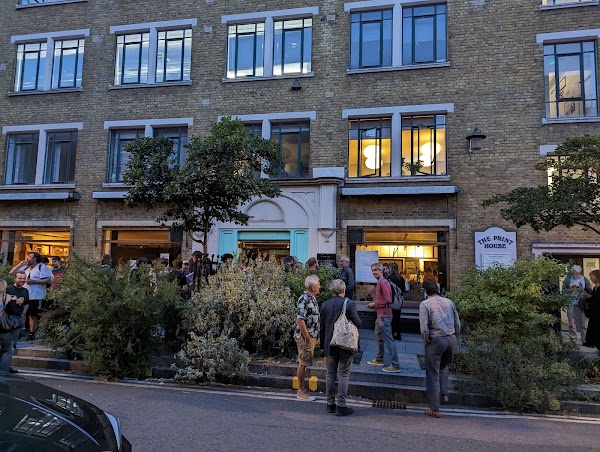
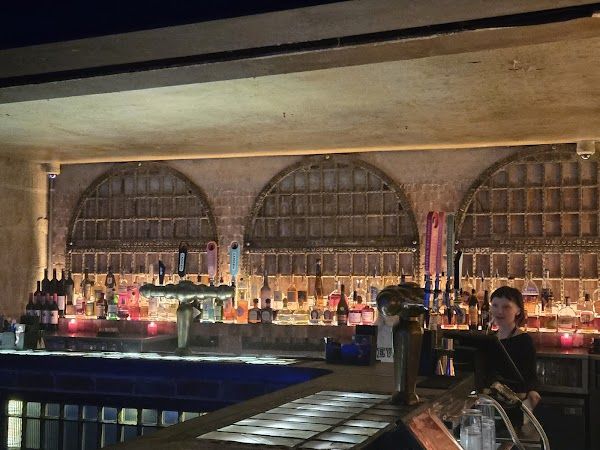
The music room sits upstairs above the bar on Gillett Square. The room holds about 100, so a Friday or Saturday set rewards an early arrival or a ticket bought ahead.
Vortex Jazz Club holds the upstairs room of the Dalston Culture House on Gillett Square, a 100-seat space that has shaped London's new jazz for two decades. The club began in 1988 on Stoke Newington Church Street and moved to this square in 2005, per its own history and Wikipedia. The room programmes the music first, and the booking runs to the adventurous end of the form.
Anyone who follows where jazz is going, rather than where it has been, finds the bill here ahead of most rooms in the city. The Vortex self programmes the larger part of its roughly 400 shows a year, which lands it somewhere between the avant garde and the accessible. Listeners who want only the familiar standards may find a given night further out than they planned.
The upstairs space is plain and close, with a low stage, a clutch of tables and a wall of windows over the square. Time Out calls it one of the few London rooms doing genuinely interesting jazz, and the tight seating keeps the band near every chair. Regulars warn the room runs warm and crowded on a full night, so the early sets feel more comfortable.
The Vortex has anchored Dalston's music life since it moved to Gillett Square in 2005, and its two decades here have made it a fixture of the British scene. Players who later filled larger rooms cut their teeth on this small stage, and the club's diary still reads as a map of where the music is heading. The square outside, opened as a cultural hub, gives the room a setting that few central clubs can claim.
The Downstairs Bar carries the drinks programme, and it names its cocktails after classic jazz albums, with its take on a margarita listed as an Ascension. Bottled ales sit around 5 pounds, which keeps a night here far below the West End rooms, a point reviewers raise often. The kitchen sends burgers, pasta and salads for anyone settling in before a set. The Vortex keeps prices low by design, and the bar stays open around the music rather than closing for it. The room sells tickets per show rather than charging a fee at the door, which keeps the cost of a night here easy to read.
The crowd skews toward players, students and listeners who read the line-up before they arrive. The square outside draws a loose early evening crowd, while the upstairs room turns quiet and attentive once a set begins. Per Time Out, the focus stays on the stage, and the welcome runs friendly rather than formal.
Anyone after only the standards, or a large seat with room to spread out, should look elsewhere.